Easy zebra print cake with Jo Tan
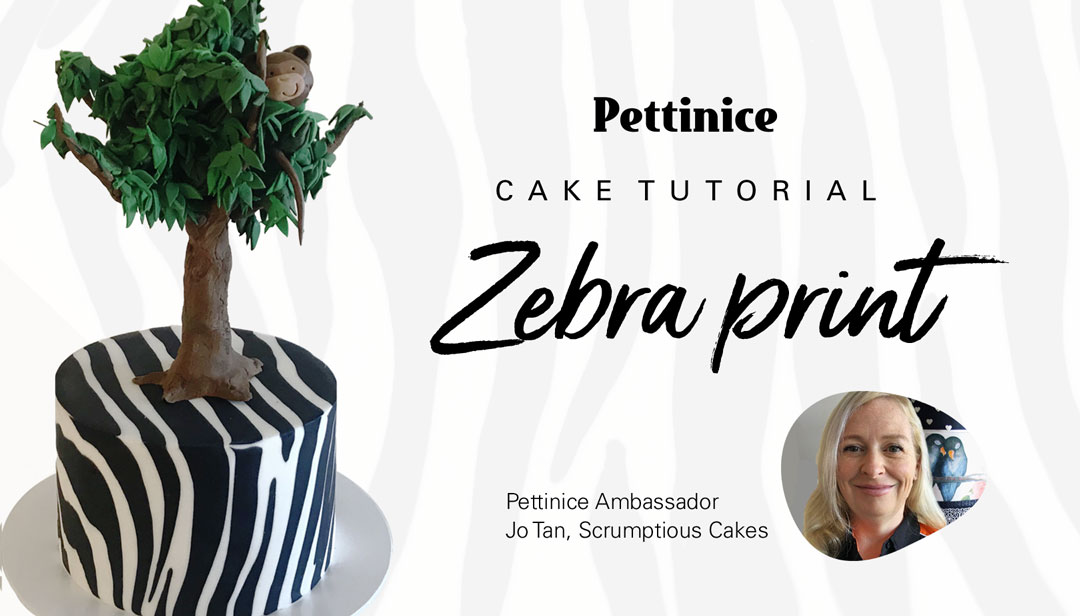
You will need:
- 500g white Pettinice
- 100g black Pettinice
- Apricot jam
- Sprink
- Cornflour
- Rolling pin
- Paring knife

Before you begin, make sure your cake is ready for your Pettinice layer.
To stick my Pettinice fondant to my ganache, I brush a 1 to 1 ratio of apricot jam and water onto the cake. I do this before I start rolling my fondant.
The key with this technique is to add as little cornflour as possible, and mainly use Bakels Sprink (or any brand of canola oil spray) to the top of your rolled out Pettinice.
So start by spraying your bench with Sprink and roll out the white Pettinice to a diameter of about 9 inches. Try to roll it out with just the Sprink under the icing and nothing on top (if the air is particularly humid you may have to sprinkle a tiny bit of cornflour to stop your rolling pin from sticking).
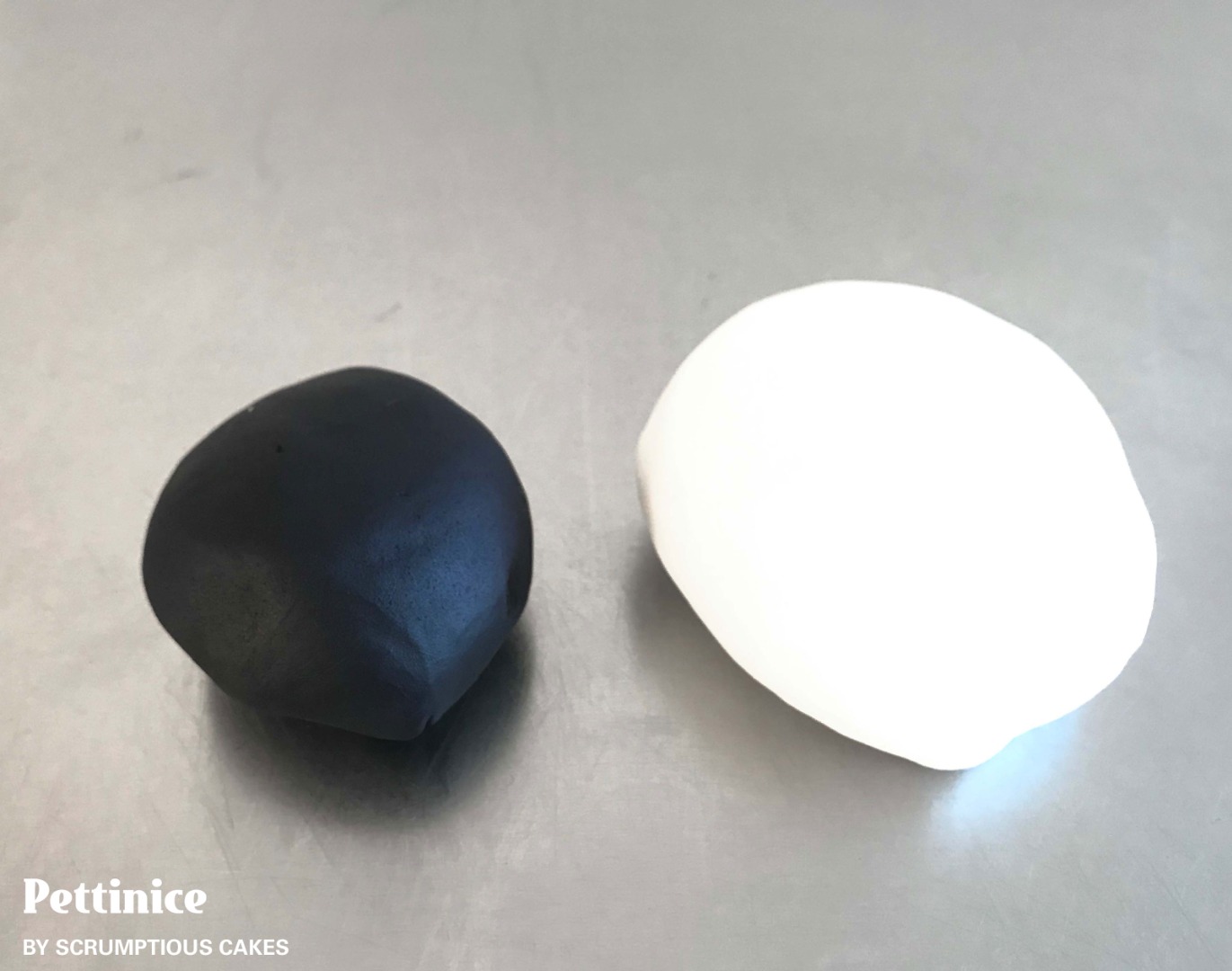
For a 6" cake, I used 500g of White Pettinice and 100g of Black Pettinice.
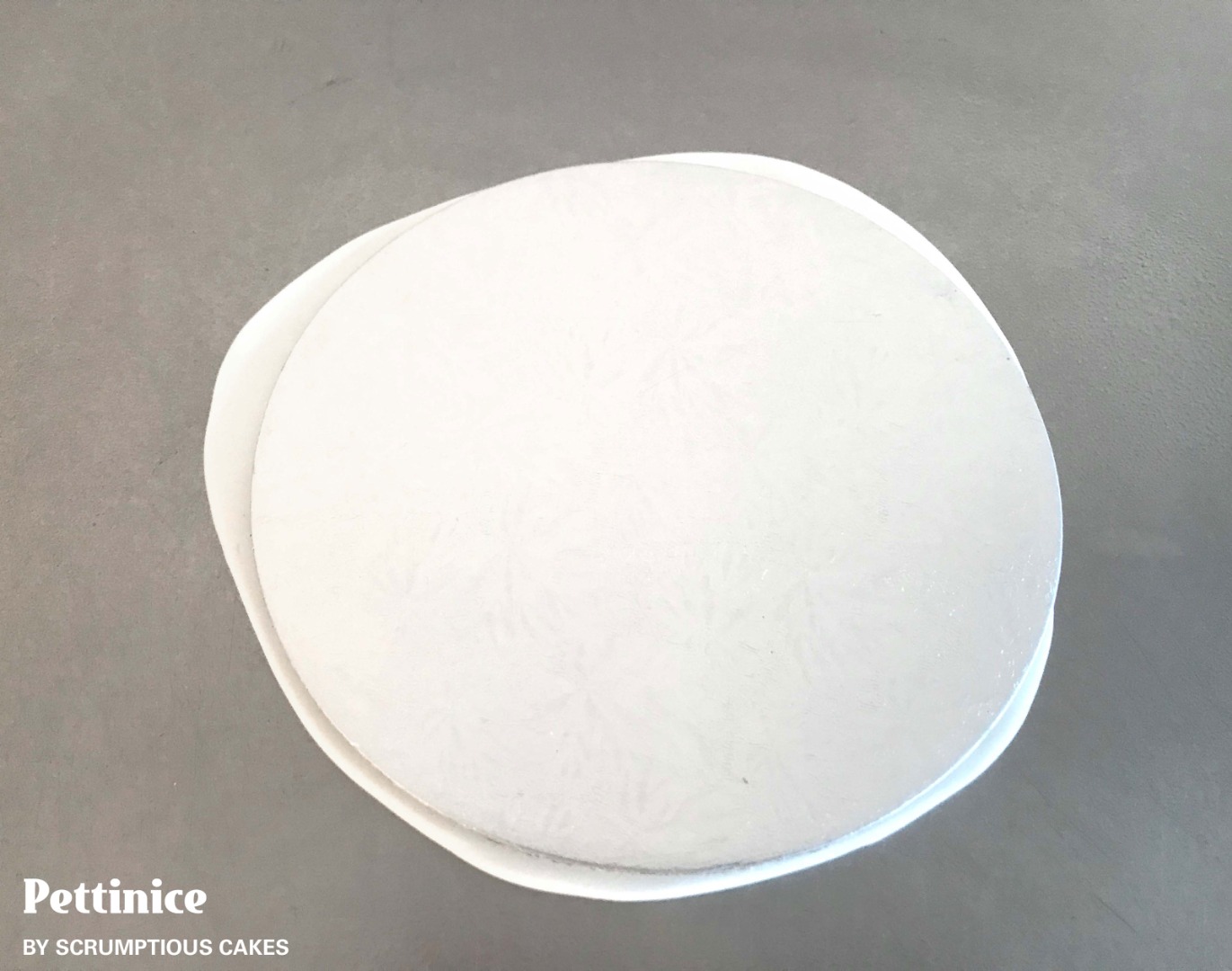
Try to roll it out with just the Sprink under the icing and nothing on top. I rolled it to 9" in diameter, to cover a 6" cake.
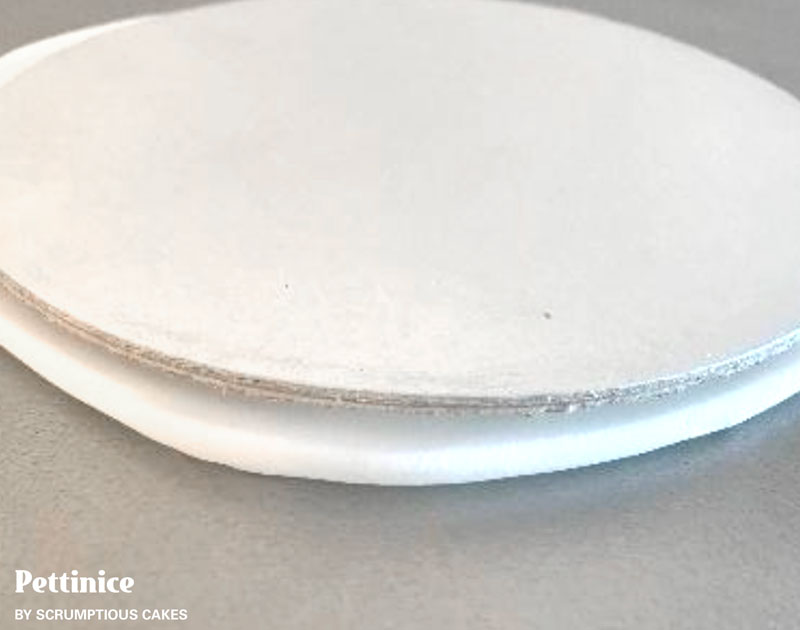
Keep the white Pettinice quite thick, as seen here.
Adding the black Pettinice zebra pattern
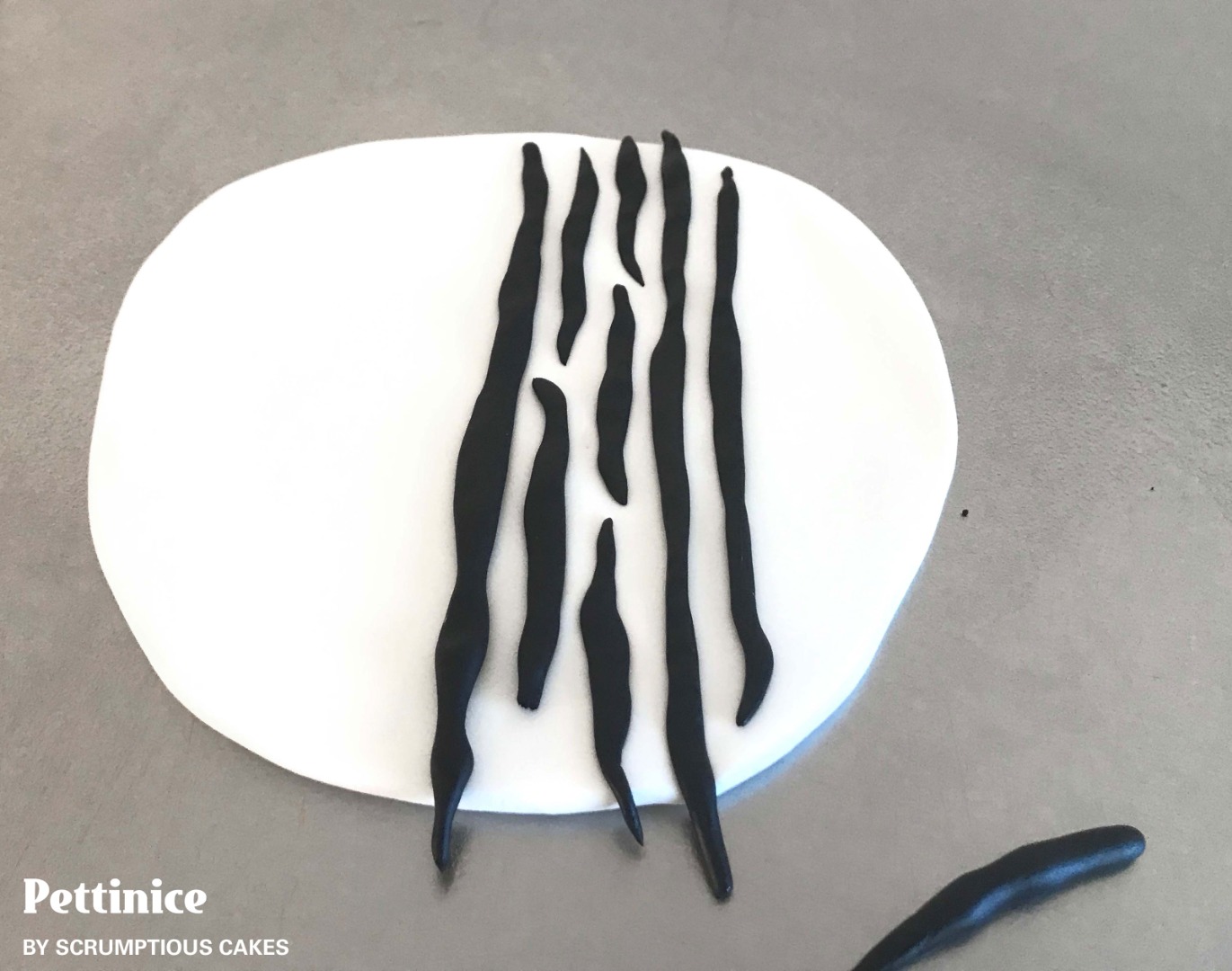
Working quickly so that your icing does not dry out, roll rough ‘sausages’ making sure that there are inconsistencies in length and thickness.
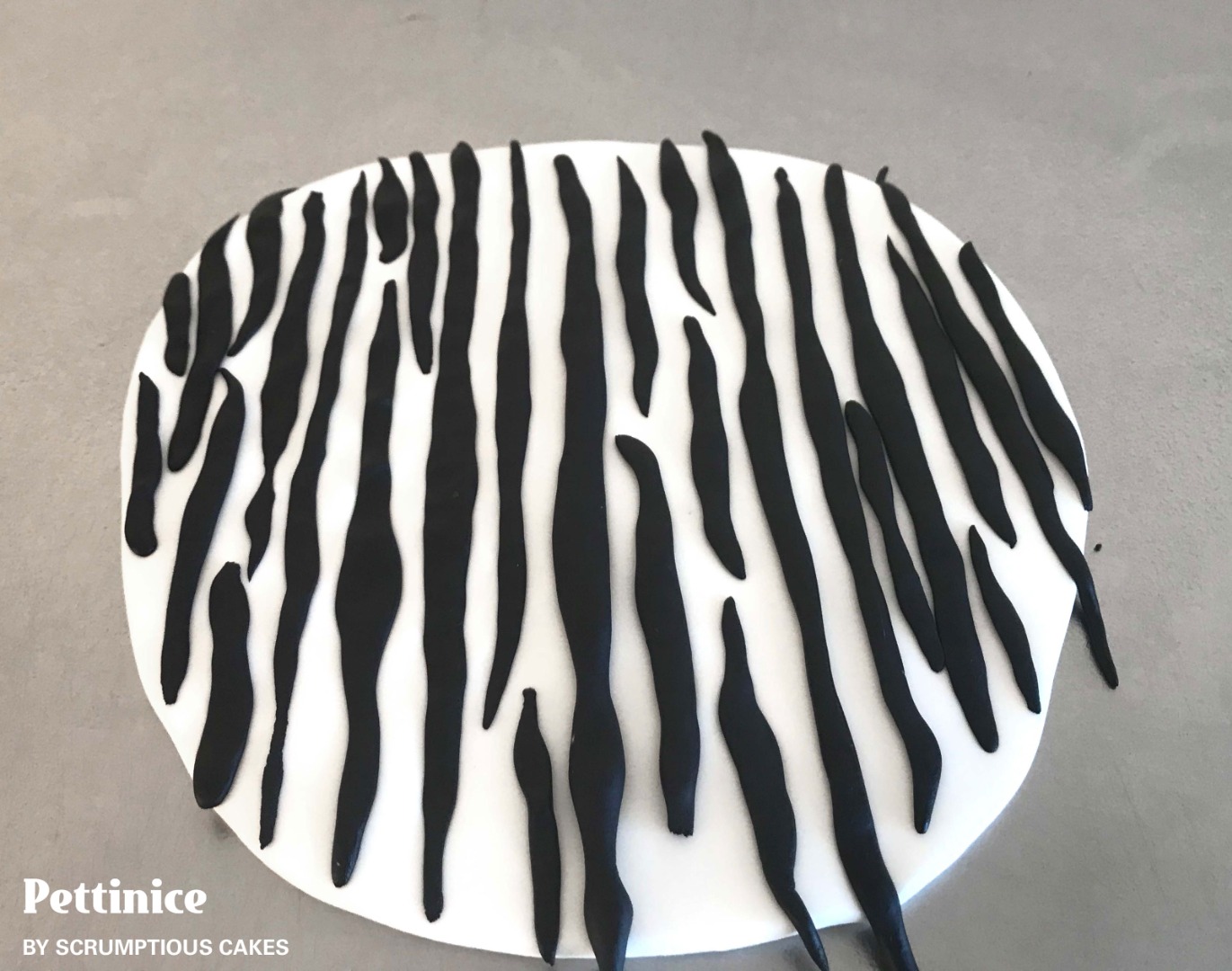
Push each sausage into the white icing not so much that it is flat but enough so that they stick.
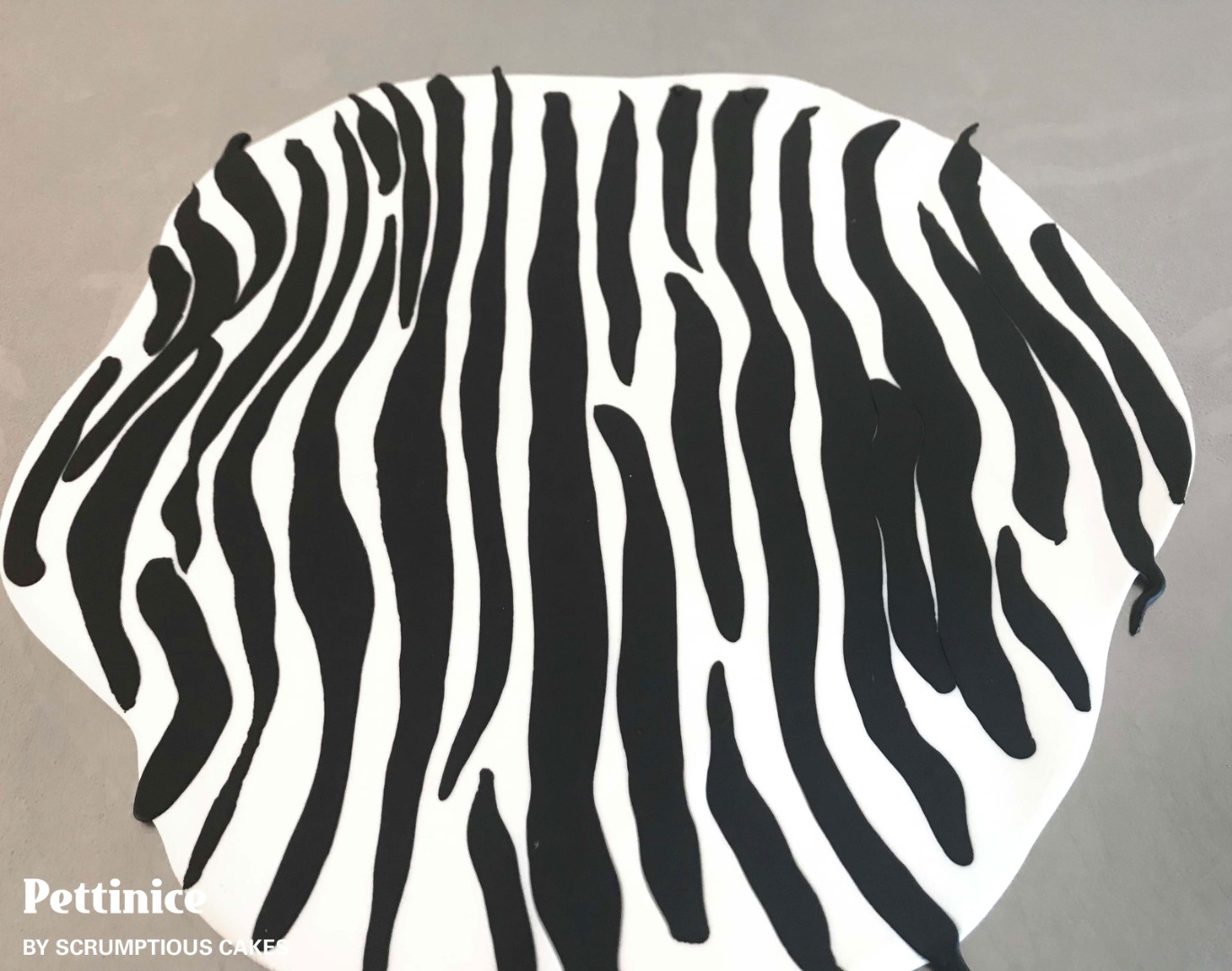
Once you have covered the entire white piece of Pettinice with black sausages as above you can start gently rolling the icing so that it gets to desired thickness for covering your cake which for me is about 3 or 4 mm thick.
When you are rolling out your Pettinice, try to roll from each direction so that way you have the right shape to cover your cake. Again, at this stage try to avoid using cornflour or Sprink for rolling as they will inhibit the black sticking to the white.
Covering your cake
Cover your cake as you would normally, at this stage you can use cornflour. As you can see, I use the upside-down method. When you are happy with your smoothed Pettinice you will need to clean off the cornflour so that the black is a crisp black; a dry brush should remove a lot and for the more stubborn bits you can use vodka, however try to use as little a possible and only go on the black, if you try to use the same brush on the white you will get a smudgy look as the black colour will spread.
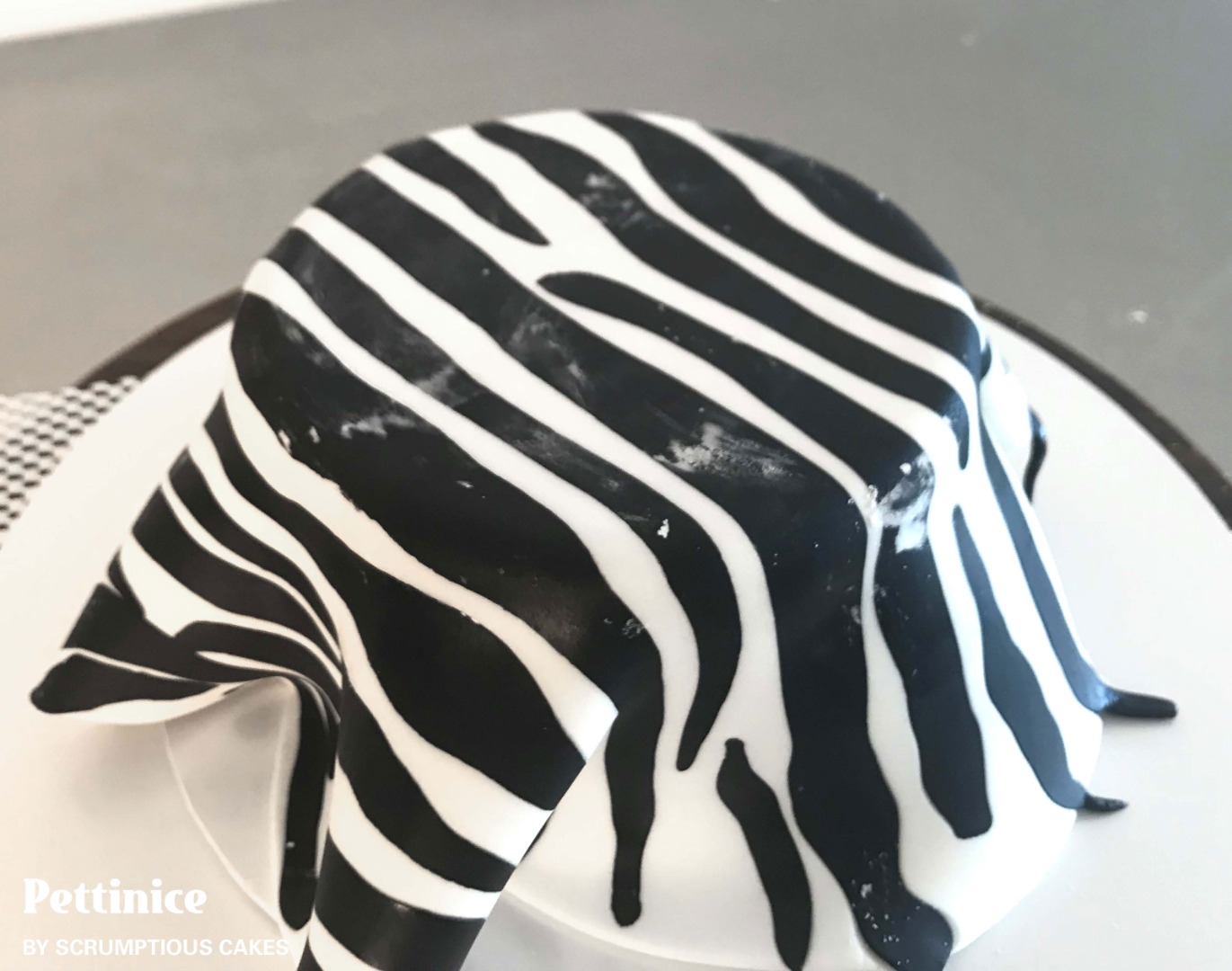
Cover your cake as you would normally, at this stage you can use cornflour.

Push down the edges, starting from the top, and avoid creating seams at the bottom.
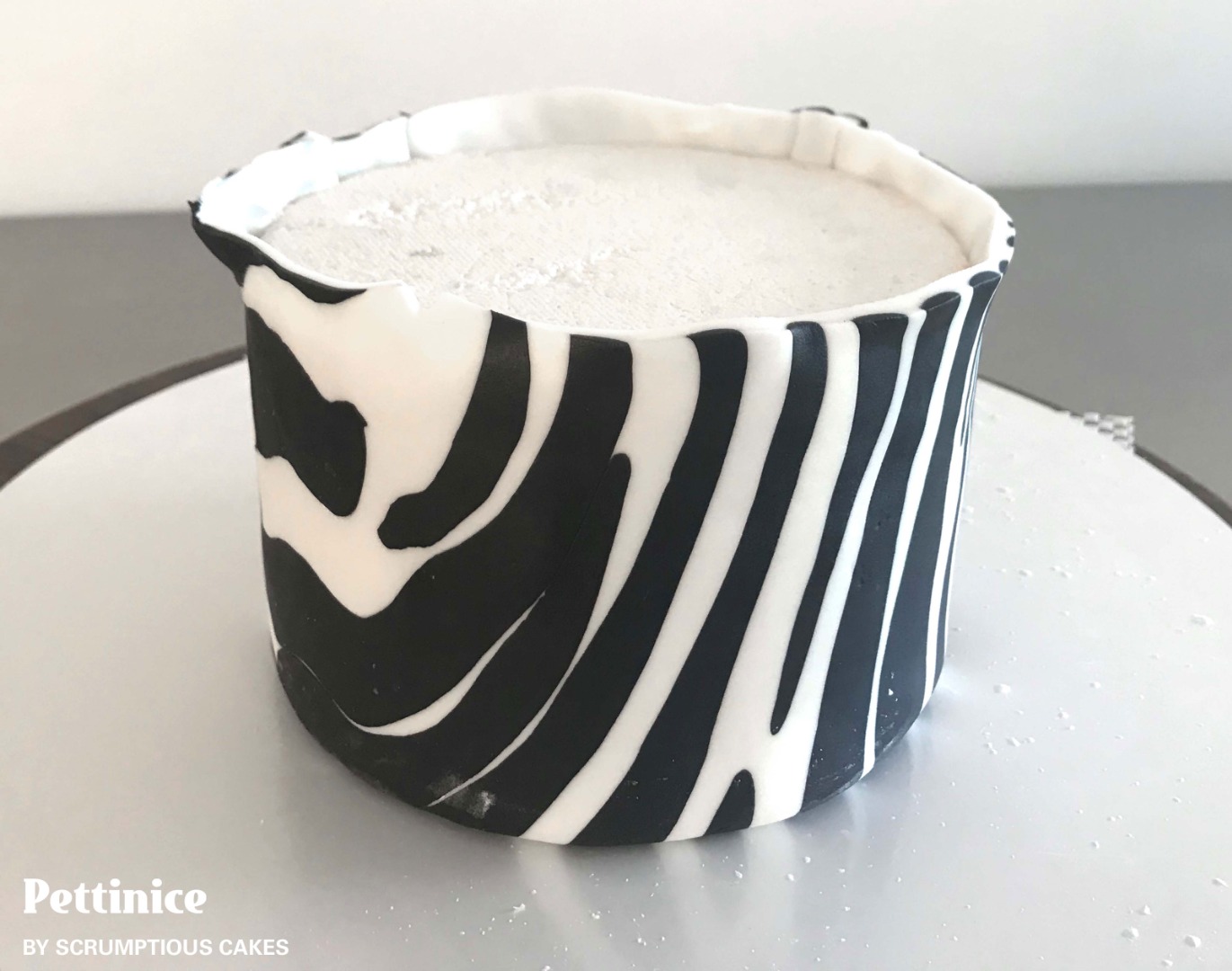
(As you can see, I use the upside-down method.)
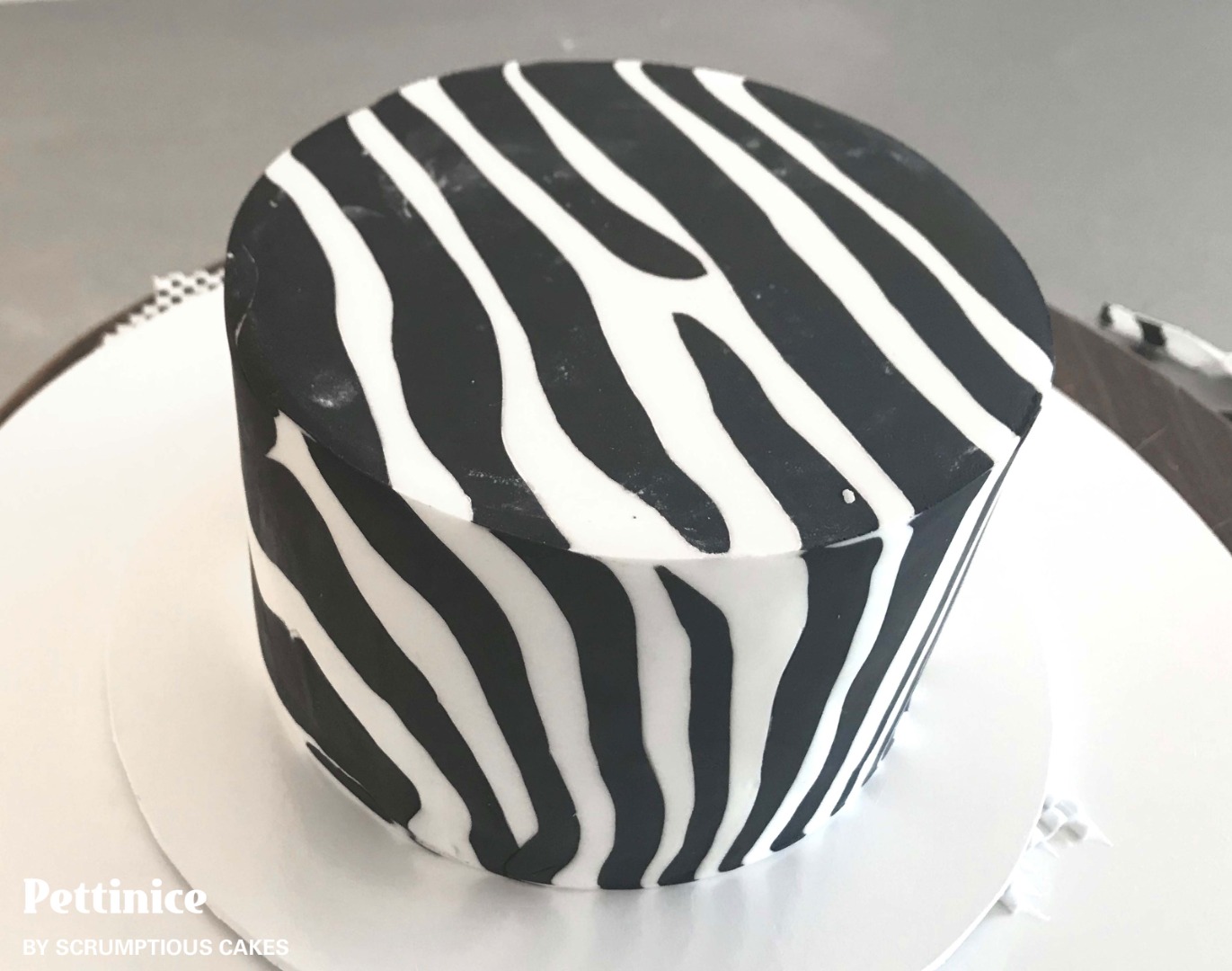
When you are happy with your smoothed Pettinice you will need to clean off the cornflour so that the black is a crisp black; a dry brush should remove a lot and for the more stubborn bits you can use vodka, however try to use as little a possible and only go on the black, if you try to use the same brush on the white you will get a smudgy look as the black colour will spread.
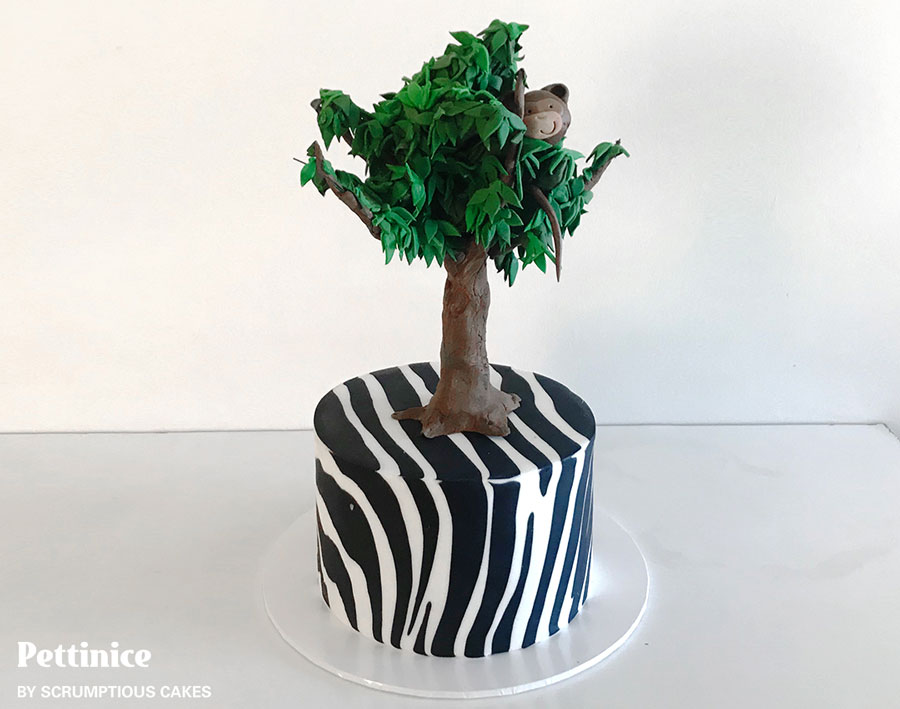

Jo started making cakes for her children around 2001 and her designs have been fun and varied, including an octopus sitting on bananas to a rainbow tree. She laughs when she recalls how terrible her first cakes turned out, but enjoyed making them so much she decided to learn how to decorate a cake properly. Now she enjoys sharing her skills while teaching and demonstrating. Her number one tip: “Patience is a virtue, so spend that extra time to get it right."
See more of Jo's cakes at